Health
One number every morning.
Here is everything under it.
Each morning the ring finishes reading the night and settles on a single recovery score. This page is that number taken apart: what was measured, what was computed, what was estimated, and what it was all compared against.
The day
The night is measured. The day is written down.
Between waking and sleeping the ring keeps a running account of what happened, and every entry says where it came from. The 7:12 run started and ended on its own, with no button pressed. The line under it is yours, said out loud on the way home. The 10:40 stretch of calls is the ring noticing something you would not have logged.
Further down there is an hour it will not name: fifty-eight active minutes, a peak of 168, no label. It asks you what that was rather than guessing and filing the guess as fact.
This is the second screen in the app, running.
The same signals. A different amount of looking.
4
minutes a year
A vital-signs check, once, on the one morning you happened to be in the room.
2,920
hours a year
Eight hours a night, every night, while nothing at all is being asked of you.
7:04 AM
The number, and its working.
Most wearables hand you a score and leave you to trust it. This is the real screen. The line at the bottom is the part that matters:
Computed at 7:04 AM from overnight ring data: beat-to-beat HRV, pulse, skin temperature and sleep staging, sampled once a minute while you slept and weighed against your 28-day baseline. Verdicts refresh each morning.
Every figure it names is one the ring took while you slept.
Out loud
Everything else is logged by saying it.
Food diaries fail for one reason: they ask you to stop and type. Double tap the ring and say it instead. No screen, no forms, no app in your hand at the end of a run.
“Just ran 5k, legs felt heavy.”
Workout
Distance and effort filed against the recovery score you woke up with, so heavy legs on an 82 morning is a note worth keeping.
“Took my magnesium.”
Medication
Timed, and kept as a streak. Weeks later it is something your sleep can be read against.
“Second coffee, quarter past two.”
Intake
Caffeine with a timestamp, which is the one input that reliably explains a bad night.
“Remind me to stretch after dinner.”
Reminder
A task on the phone, without unlocking the phone.
The microphone opens on a double tap or on your own speech, and nothing else. Audio is transcribed on your phone and never uploaded, so what leaves the ring is a sentence, not a recording.
Plainly
Rates, not adjectives.
±0.1 °C
Skin temperature
Against a reference thermometer, at the finger
1 Hz
Pulse sampling
Every second, continuously, day and night
28 nights
Baseline window
Before the ring will call anything unusual
30 s
Sleep staging
Classified per epoch. An estimate, not a sleep lab
Sleep staging is the weakest of these and we would rather say so: a ring infers stages from pulse, motion and temperature, where a sleep lab reads brain activity directly. Treat the stage breakdown as a good estimate and the timing as reliable.
Over time
One night is a reading. Fourteen is a pattern.
A resting pulse of 52 is remarkable in one person and ordinary in another. The ring has to learn which one you are.
Night 1
A number, and nothing to weigh it against.
You get the reading. The ring has never met you before, so it says nothing about what it means.
Night 14
Your normal, roughly drawn.
Enough nights to know your usual pulse and temperature, and to flag the morning one of them moves.
Night 60
Get in before 11:30 and your deep sleep runs 22 minutes longer.
1h 42m before 11:30, 1h 20m after. It has stopped reporting numbers and started noticing things.
Also from Vexo
The same signals, read as a cycle.
Nightly temperature and heart signals carry a second story for anyone who menstruates: not a line drifting over months but a phase, repeating. Vexo reads it, names where you are in it, and says what that means for today.
Explore women's health
What the ring is made of
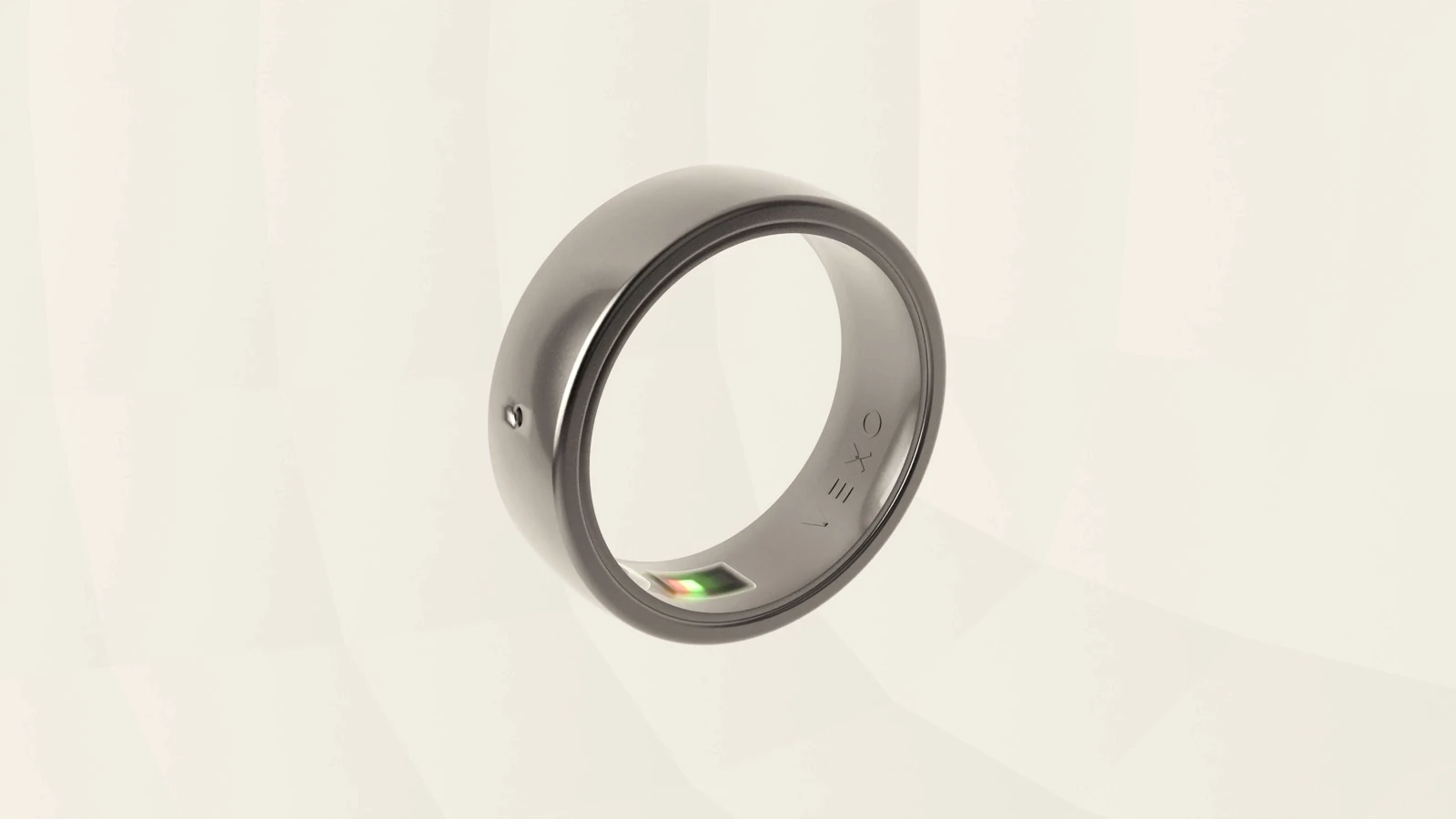
Titanium, 2.4 grams, five days on a charge, and two optical windows set 72 degrees apart on the inside of the band.
See the ringWhere your data lives
Transcription and insight run on your phone, and raw waveforms stay on the ring.
Read the privacy commitment
Begin
Wear it and find out.
One ring, worn day and night, that spends the first month learning what normal feels like for you. Reserve for $99, fully refundable. Free sizing kit first, then your ring ships January 2027.
Vexo is not a medical device. Its readings and insights are for general wellness only. They are not intended to diagnose, treat, cure or prevent any condition. Talk to a healthcare professional about any health concern, and never delay care based on what Vexo shows you.